DYE PENETRANT TESTING
PCN Level 3 Dye Penetrant Inspection
Duration: 3 days (21 hours) Minimum
Course Overview:
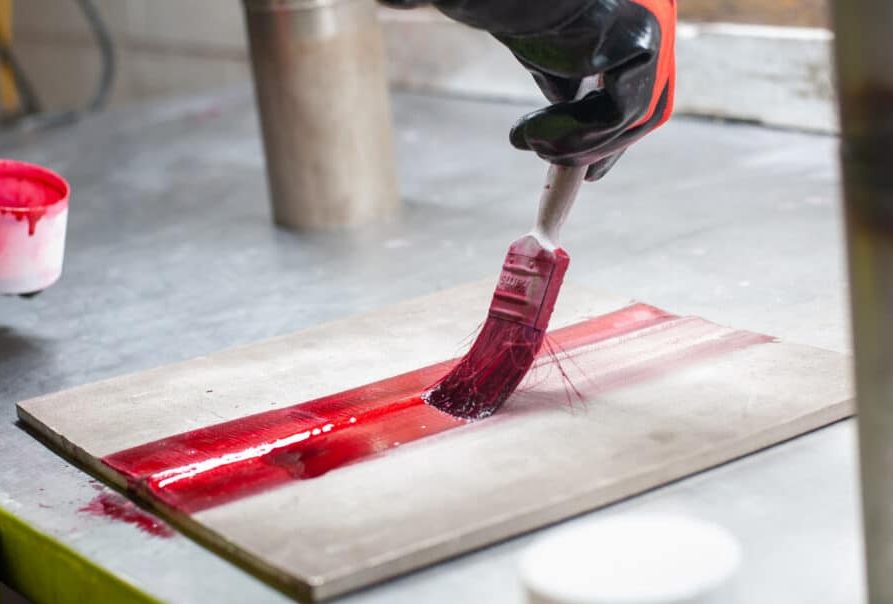
This course provides theory and practical work on test pieces and industrial components, with emphasis on interpretation of defect indications, also comparing sensitivity of the visible and fluorescent methods. Using portable, stationary equipment as required. Dye Penetrant Inspection is a widely applied and method used to locate surface-breaking defects in all non-porous materials (i.e. metals, plastics, or ceramics) using dye. Candidates will gain an enhanced understanding of PT that will enable them to implement this NDT method competently.
Course Content:
- Basics of NDT, classifications of NDT
- History and principles of PT- Physical properties of penetrant materials- principles
- Surface cleaning techniques
- Penetrant Classification- removal of excess penetrant- Advantages and Limitations of Penetrant Methods
- Developer- properties -Classification of Developers
- Inspection Techniques - Penetrant material family classification, inspection processing parameters
- Penetrant Equipment's- Auxiliary equipment's - Viewing conditions -equipment and familiarization,
- Maintenance of Materials & Quality control check-process control-reference blocks
- indication –Interpretation & Recording -Origin and nature of discontinuities
- Product technology- welding, casting, forging, wrought and its associate defects
- Inspection & reporting of welds, casting, wrought products using Visible , fluorescent penetrant of various types of weld joints using various methods
- Daily assessment and EOC assessment
Course Objectives:
- Understand the basic principles of Dye Penetrant Inspection
- Selection Pre cleaning techniques, parameters and its implementation as per the equipment
- Understanding various equipment’s and its applications
- understanding calibrations, inspections, technique selection, planning
- Carry out penetrant inspection of welds, casting, forgings using water washable, post emulsifiable, solvent removable processes if candidate do not hold Level 2
- Process control checks, calibration and validation process
- Duties and Responsibilities of a certified PT Level 3
- Demonstrate the ability & competence to evaluate, interpret results as per standards, codes, specifications
- Understanding the various product forms and its inspection methodology with PT
- Guidelines for procedure using the codes, Establishing the procedure, acceptance criteria when not available and guidance to all levels
- Meet the syllabus requirements for PCN Level 3 as per PCN GEN Appendix Z1 , PCN24/GEN/APP/PT & PCN24/AQB/REQ/PT
Experience:
- Note1: *Higher education recognised by BINDT is restricted to a recognised degree in non-destructive testing.
- Note 2: One-day duration is at least seven hours, which can be achieved on a single day or by accumulating hours. The maximum allowable hours in any one day is 12 hours. Experience in days is achieved by dividing the total accumulated hours by 7.
- Higher education*, with Level 2 -180 days
- With Level 2 - 240 days
- Direct access, with higher education* - 360 days
- PCN PT Level 2 (multisector) or any BINDT recognised PT Level 2 qualification is mandatory to be eligible for PT Level 3 exam.
- Refer PCN24- GEN (latest issue for experience requirement), PCN 24-PSL 30 and RT-FM-A-03 - JOINING INSTRUCTIONS (latest )for Training duration, experience requirement
PCN Level 2 Dye Penetrant Inspection
Duration: 5 days (35 hours) Minimum
Course Overview:
This course provides theory and practical work on test pieces and industrial components, with emphasis on interpretation of defect indications, also comparing sensitivity of the visible and fluorescent methods. Using portable, stationary equipment as required. Dye Penetrant Inspection is a widely applied and method used to locate surface-breaking defects in all non-porous materials (i.e., metals, plastics, or ceramics) using dye. Candidates will gain an enhanced understanding of PT that will enable them to implement this NDT method competently.
Course Content:
- Basics of NDT, classifications of NDT
- History and principles of PT- Physical properties of penetrant materials- principles
- Surface cleaning techniques
- Penetrant Classification- removal of excess penetrant- Advantages and Limitations of Penetrant Methods
- Developer- properties -Classification of Developers
- Inspection Techniques - Penetrant material family classification, Penetrant inspection processing parameters
- Penetrant Equipment's- Auxiliary equipment's - Viewing conditions -equipment and familiarization,
- Maintenance of Materials & Quality control check-process control-reference blocks
- indication –Interpretation & Recording -Origin and nature of discontinuities
- Product technology- welding, casting, forging, wrought and its associate defects
- Inspection & reporting of welds, casting, wrought products using Visible , fluorescent penetrant of various types of weld joints using various methods
- Practical exercise and Daily assessment
Course Objectives:
- Understand the basic principles of Dye Penetrant Inspection
- Selection Pre cleaning techniques
- Selection of penetration inspection techniques
- Understanding various equipment’s and its applications
- Carry out penetrant inspection of welds, casting, forgings using water washable, post emulsifiable, solvent removable processes
- Process control checks
- Guidelines for written instruction, codes and test reports
- Meet the syllabus requirements for PCN Level 2 as per PCN GEN Appendix Z1 , PCN24/GEN/APP/PT & PCN24/AQB/REQ/PT
Experience:
- With level 1- 45 days, Direct access- 60 days
- Refer PCN24- GEN (latest issue for experience requirement), PCN 24-PSL 30 and RT-FM-A-03 - JOINING INSTRUCTIONS-(latest) for Training duration, experience requirement.
- Note: . One-day duration is at least seven hours, which can be achieved on a single day or by accumulating hours. The maximum allowable hours in any one day is 12 hours. Experience in days is achieved by dividing the total accumulated hours by 7.
PCN Level 1 Dye Penetrant Inspection
Duration: 3 days (21hours) Minimum
Course Overview:
This course provides theory and practical work on test pieces and industrial components, with emphasis on interpretation of defect indications, also comparing sensitivity of the visible and fluorescent methods. Using portable, stationary equipment as required. Dye Penetrant Inspection is a widely applied and method used to locate surface-breaking defects in all non-porous materials (i.e., metals, plastics, or ceramics) using dye. Candidates will gain an enhanced understanding of PT that will enable them to implement this NDT method competently.
Course Content:
- Basics of NDT, classifications of NDT
- History and principles of PT- Physical properties of penetrant materials-Viscosity, bleed out, Flash point, Emulsification of penetrant, Development, Coloured and fluorescent penetrant
- Terminology -Product family, Penetrant, Developer, Remover, Reference block
- Surface cleaning techniques
- Penetrant Classification- Classification of Developers
- Aerosol spray cans, Dip installations, brushing, light sources, measuring units and reference blocks
- Product technology- welding, casting, forging, wrought and its associate defects
- Inspection & reporting of welds, casting, wrought products using Visible, fluorescent penetrant of various types of products using various methods
- Application of a written instruction
- Practical exercise and Daily assessment
Course Objectives:
- Understand the basic principles of Dye Penetrant Inspection
- understanding Pre cleaning techniques, penetration inspection techniques
- Understanding various equipment’s and its applications
- Carry out penetrant inspection of welds, casting, forgings using water washable, post emulsifiable, solvent removable processes
- Follow and apply the instructions
- Meet the syllabus requirements for PCN Level 1 as per PCN GEN Appendix Z1 , PCN24/GEN/APP/PT & PCN24/AQB/REQ/PT
Experience:
- 15 days
- Note: One-day duration is at least seven hours, which can be achieved on a single day or by accumulating hours. The maximum allowable hours in any one day is 12 hours. Experience in days is achieved by dividing the total accumulated hours by 7.